
We take our prospective clients as we find them.
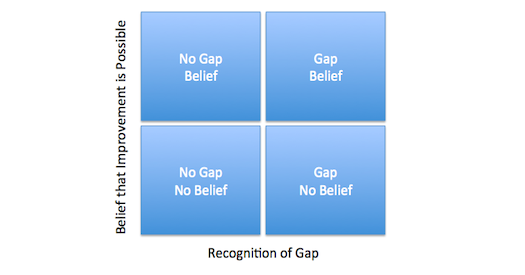
Sometimes we find that our prospective clients are already dissatisfied, and they often have a pretty good idea of what might help them to produce better results. There is a gap between their present state and their desired future state.
Other times, we find prospective clients that have come to accept a level of performance that is far less than they need, believing that there is no better performance available to them. They may recognize a gap, but they may not believe that there is a better future result available to them—at least not without too high a cost.
Still other times, we find that our prospective dream clients believe that they are doing well, even though we could help them produce far better results than they are now producing. They don’t recognize a gap at all. Sometimes they are easily convinced that they can produce a better result, and some are more difficult to convince (some are obstinate, believing that if a better results were possible, they would have already discovered it themselves).
Your approach should—and will—vary based on where you find your prospective dream client.
The Full Arrays of Tools
It’s problematic to follow a sales approach that pretends that clients are always found in the same quadrant (above). If you believe, for example, that your clients are always aware of the gap in their performance and that they always believe it can and should be improved, you start with a diagnosis and discovery call that helps them to frame their needs.
But what if your dream client agrees that they have a gap between their current and their desired state, but they don’t believe you—or anyone else—can make an improvement? What if promises have been made and not kept enough times that your dream client accepts the status quo, believing no improvement is possible? You still start with discovery sales call, but you might have to build that discovery around providing proof that better results are possible very early in the sales process. You might have to challenge their beliefs and show them evidence.
If your client doesn’t recognize that there is a gap, but they are open to the general belief that there is always an improvement to be made, your approach may require a more basic provocation. You may have to push them to see where greater results are possible, and you may have to show them what could be. This approach would not be necessary—or right—if your prospective client is already dissatisfied around some area where you can already help them to produce a greater result).
And, there are some prospective clients that believe that they have the world by a string, and that no one could possibly do better than they are doing now. In cases like these, you have to determine whether or not you can make all of the sales necessary to create and win an opportunity: selling them on a gap, selling them on believing that improvement is possible, and then selling them that you are the right partner to help them. Fortunately, this is a rare group; most people inherently believe that some level of improvement is possible, even if they don’t have a great deal of dissatisfaction.
You need a full array of tools and approaches that take clients as you find them. Even though every first sales call is discovery and a diagnosis at some level, what you discover and how you approach your client depends on where you find them. Even if you are provoking your prospective client with a new, innovative idea, you are still doing discovery and diagnosis by helping your client discover a gap or change their beliefs by asking questions and offering some proof, some demonstration of capabilities.
Questions
Are all of your prospects aware of a gap in their performance when you find them?
Do they always believe that their results can be improved by switching partners? Why not?
How do you compel a prospective client when they don’t yet recognize a gap?
How do you help them to believe what is really possible?
How do you become aware of where your prospective client is in the buying cycle?


.jpg?width=768&height=994&name=salescall-planner-ebook-v3-1-cover%20(1).jpg)